Shopping Cart
(0)
Free shipping included — no minimum on any US order

Quick Search:
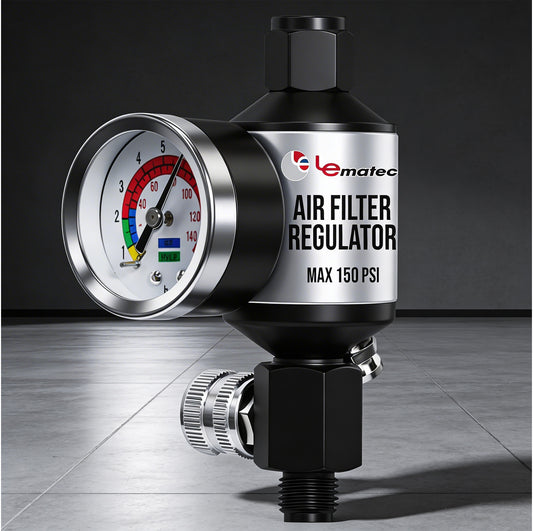
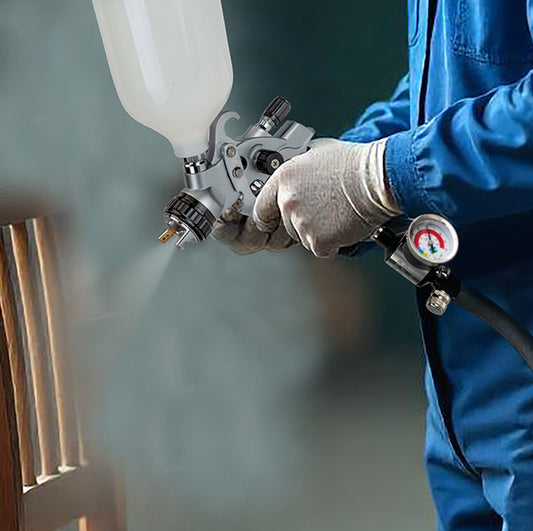


Air tools usually get blamed for weak performance when the real problem is the hose. If you are figuring out how to choose air hose size, the goal is simple: deliver enough air to the tool without choking flow, dragging around more hose than you need, or paying for capacity you will never use.
That sounds straightforward, but hose size affects more than one thing at once. Inner diameter changes airflow. Length changes pressure drop. Fittings can bottleneck the whole setup even if the hose itself is large enough. And the right answer depends on whether you are running a tire inflator for short bursts, an impact wrench in a garage bay, or a grinder that stays on for long stretches.
Start with the tool, not the compressor sticker and not whatever hose is on sale. Every pneumatic tool has a required airflow, usually listed in CFM, and a recommended operating pressure, usually around 90 PSI. Those numbers tell you how much air has to reach the tool under load.
A small hose can still show full pressure on a regulator with the trigger released. That is where people get fooled. Once the tool starts pulling air, a hose that is too narrow or too long creates restriction, pressure drops at the tool, and performance falls off. Impacts hit softer, grinders slow down, sanders feel inconsistent, and blasting becomes uneven.
For most buyers, the first decision is inner diameter, usually called ID. The common sizes are 1/4-inch, 3/8-inch, and 1/2-inch. As a rule, 1/4-inch hose works for lower-demand tools and short runs. A 3/8-inch hose is the everyday workhorse for many shops because it supports better flow for impact wrenches, ratchets, drills, and general-purpose use. A 1/2-inch hose is usually reserved for high-demand applications, longer runs, or setups where multiple restrictions would otherwise stack up.
If you want the shortest version, here it is: match hose ID to the most air-hungry tool you actually use, then keep the run as short as your workspace allows.
Need the hose and fittings to match?
The 15-piece quick-connect hose & fittings kit covers the sizes and couplers in this guide.
Shop the Hose & Fittings Kit →A blow gun or tire inflator can get by on less than a grinder, dual-action sander, or blast cabinet setup. Tools with intermittent use, like many impact wrenches, are more forgiving because they are not drawing air continuously. Continuous-use tools expose hose restrictions much faster.
If your tool is rated at the edge of what your compressor can supply, do not make the hose the next bottleneck. That is where moving from 1/4-inch to 3/8-inch often makes a noticeable difference.
The longer the hose, the more friction loss you create. A 25-foot hose and a 100-foot hose with the same inner diameter do not perform the same. If you need extra reach, increasing hose diameter can help offset the pressure drop.
This is why a 1/4-inch hose can feel fine in a compact garage for light-duty tasks, then become a problem on a bigger shop floor or driveway where the run gets stretched out.
This is the part many people skip. You can buy a larger hose and still lose performance through undersized quick-connects, restrictive swivels, or cheap fittings with narrow internal passages. The airflow path is only as good as its smallest restriction.
If you are stepping up to a 3/8-inch hose for better performance, make sure the couplers and plugs support that flow. Otherwise, you paid for hose capacity you cannot use.
For light-duty air tools and short runs, a 1/4-inch hose often works fine. Think inflators, nailers, blow guns, and occasional low-demand tasks. It is lighter, easier to coil, and less tiring if you move around a lot.
For general shop use, 3/8-inch is the safer choice. If you run impact wrenches, air ratchets, drills, cutoff tools, or moderate-demand repair tools, this size covers a lot of ground without becoming bulky. It is a strong default for buyers who want one hose that can handle most garage and fabrication work.
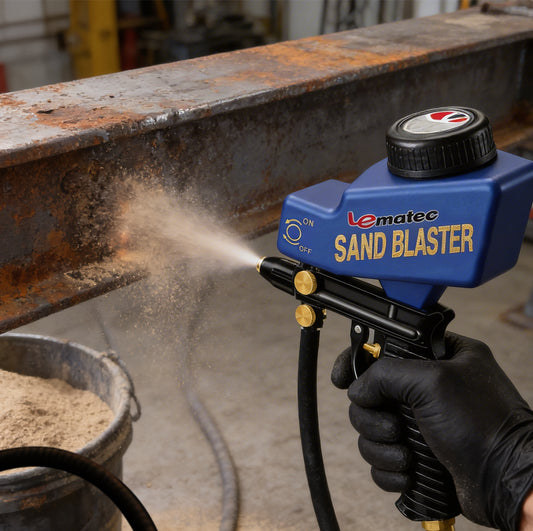
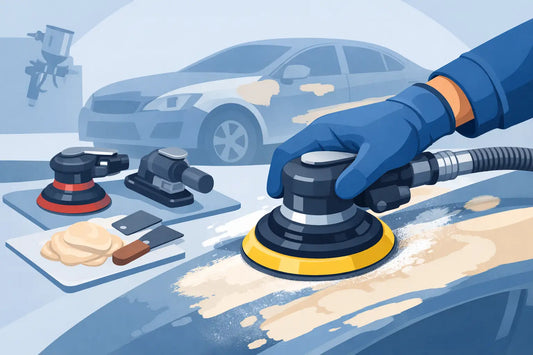
For grinders, sanders, paint prep tools, some sandblasting setups, and long hose runs, 1/2-inch starts making more sense. These jobs expose airflow problems quickly. If the tool runs continuously, airflow stability matters more than hose convenience.
That does not mean bigger is always better. A 1/2-inch hose is heavier, stiffer, and more expensive. For quick service work or lighter-duty tasks, that extra bulk can be more annoyance than benefit.
A lot of users land on 3/8-inch because it balances flow and usability. It supports more demanding tools than a 1/4-inch hose, but it is still manageable for everyday movement around a vehicle, bench, or work bay.
If you are an automotive user running impacts, ratchets, inflators, and the occasional grinder, 3/8-inch usually gives you enough margin without overbuilding the setup. That matters when you want predictable tool performance and do not want to troubleshoot weak output every time a job changes.
For a buyer who wants one dependable hose instead of several specialized ones, 3/8-inch is often the practical answer.
The hose cannot fix an undersized compressor. If the compressor cannot deliver the tool’s required CFM, a larger hose will not create airflow that is not there. What the right hose does is reduce avoidable losses between the tank and the tool.
Think of it this way: compressor capacity sets the ceiling, and hose size determines how much of that air actually reaches the tool when you pull the trigger.
If your compressor is already just barely keeping up, choosing the right hose becomes even more important. That is when restrictions that seem minor on paper show up as slower tool speed, reduced torque, or frequent pressure recovery pauses.
When people ask how to choose air hose size, they often focus only on diameter. Material matters too because it affects weight, flexibility, and cold-weather handling.
PVC hoses are common and affordable, but they can get stiff, especially in cooler conditions. Rubber hoses are durable and stay flexible, though they tend to be heavier. Hybrid polymer hoses often split the difference and are popular for buyers who want easier handling without giving up too much toughness.
This does not change the airflow math, but it does change how likely you are to use the hose without fighting it all day. For mobile work or frequent repositioning, that matters.
One common mistake is buying by outer diameter instead of inner diameter. Airflow is based on the opening the air actually moves through, so ID is the number that matters.
Another mistake is focusing on peak tool performance instead of real use. An impact wrench used in short bursts may tolerate a smaller hose better than a sander running continuously. Duty cycle matters.
The third mistake is stacking too many add-ons. Extra couplers, long whip hoses, splitters, and reels all introduce some restriction. None of those parts are automatically bad, but together they can turn a decent setup into a weak one.
If you are setting up a home garage for tire service, light repair, and occasional impact use, a 3/8-inch hose in a moderate length is usually the safest buy. It gives you room to grow into more demanding tools without immediately needing an upgrade.
If your work is mostly inflating, cleaning, or nailer-type tasks, a 1/4-inch hose keeps things lighter and easier to manage. Just be honest about whether your tool lineup might expand.
If you are doing fabrication, body prep, sanding, grinding, or sandblasting, lean toward more flow, not less. A larger hose paired with full-flow fittings gives you a better shot at steady performance, especially over longer distances.
For buyers who want fewer headaches, it makes sense to choose hose size based on the most demanding tool in the shop, not the least demanding one.
The best hose is not the biggest one on the shelf. It is the one that delivers the air your tools need, over the length you actually run, with fittings that do not choke the system. For many shops, that points to 3/8-inch. For lighter tasks, 1/4-inch still has its place. For heavy airflow and long runs, 1/2-inch earns the extra bulk.
If you buy air tools to get work done faster, hose size is not a minor accessory decision. It is part of the system. Get it right once, and everything downstream works the way it should. That is usually the cheapest upgrade in the shop.


 AIR REGULATORS

 ACCESSORIES